
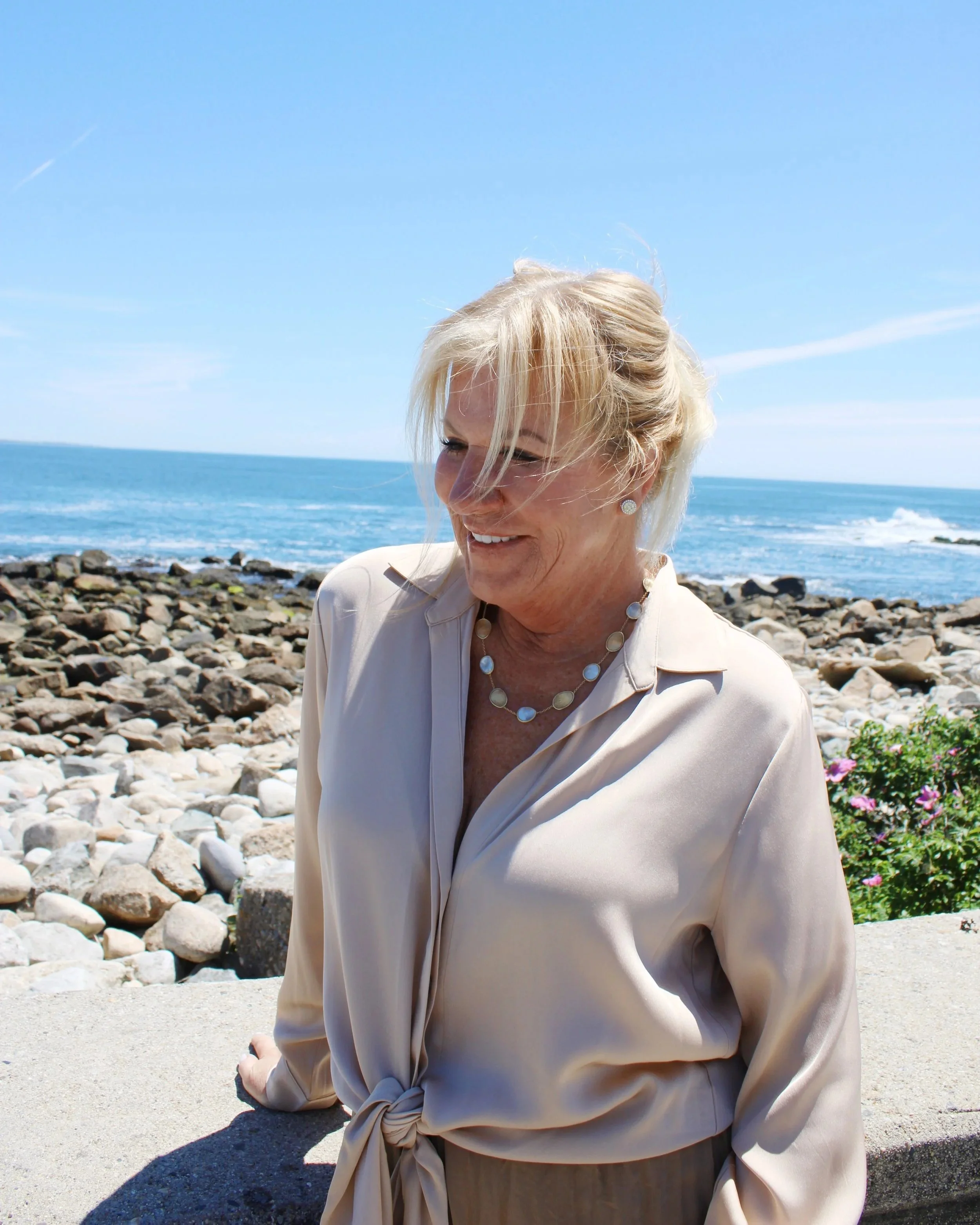
Dr. Amy Casey
I spent the first half of my career, until the age of 55, in the corporate world—
coaching executives and teams within Fortune 500 companies, the US Air Force and the Navy, to name a few, through significant organizational shifts to help them manage structural evolution and reach ever-evolving goals. I spoke confidently in front of notable leaders and led corporate training programs often. I was self-assured and capable in my professional and personal life—and in a position of relevance and visibility.
Then, a swift shift occurred in my confidence and feelings of value and relevance…
In my mid-50s, I faced significant changes that compelled me to reevaluate my identity and purpose—not from a place of empowerment and confidence, but from a place of fear and insecurity. I found myself feeling less visible when I spoke up in meetings, less relevant when I shared my ideas, and increasingly disconnected from colleagues and the work I once loved. At the same time, my children left home, and I became an empty nester.
Amidst this turbulence, societal stigmas surrounding women my age in the corporate environment added to my decision to pursue semi-retirement. Cultural expectations and the fear of being perceived as outdated in a rapidly evolving work environment weighed heavily on my mind.
Unfortunately, as I navigated these changes, I quickly realized that acting out of insecurity and fear rarely leads to positive outcomes. Instead, I was left with feelings of social isolation, struggling to connect with new peers and facing the emotional toll of disengagement from both my professional and personal life. Alongside these challenges, existential questions began to surface regarding legacy, purpose, identity, and the fear of upcoming changes I would inevitably encounter. I felt a rising anxiety, and despite having always been adept at shifting gears and reinventing myself, I had no idea where to begin this time.
In my struggle, I began researching the challenges women face through the aging process. Was I alone? Was this common? To my disappointment, I found limited resources specifically addressing women transitioning through their middle ages. However, I did uncover various psychological theories that resonated with my experience. I recognized some of my feelings as forms of loss and learned about Elisabeth Kübler-Ross’s Five Stages of Grief, realizing these emotions were part of a broader human experience. I also explored Erik Erikson’s Eight Stages of Psychosocial Development and Carl Jung’s Theory of Individuation, which provided valuable perspective.
Still, I found that these models often overlook the unique experiences of middle-aged and older women and did not fully reflect the stories I was hearing from the women around me. That’s why I created Your Second Becoming—a roadmap designed to collect and integrate the personal experiences of women navigating their middle ages with psychological theories and other academic testimony to create a roadmap that empowers women to embrace their personal evolutions and become fervently realigned with their identities.
Armed with this mission, I worked hard to reshape my own narrative, became Myers-Briggs certified, deepening my understanding of personality dynamics, earned my master's degree, and later received a PhD in transpersonal psychology.
Now, my focus is on hearing your voice and collecting your stories to develop this ever-evolving roadmap, while fostering a supportive community where women can share their experiences, insights, and strategies with one another. Together, we can transform the way women approach aging. Let’s explore, reflect and share our stories as we navigate the aging process together.